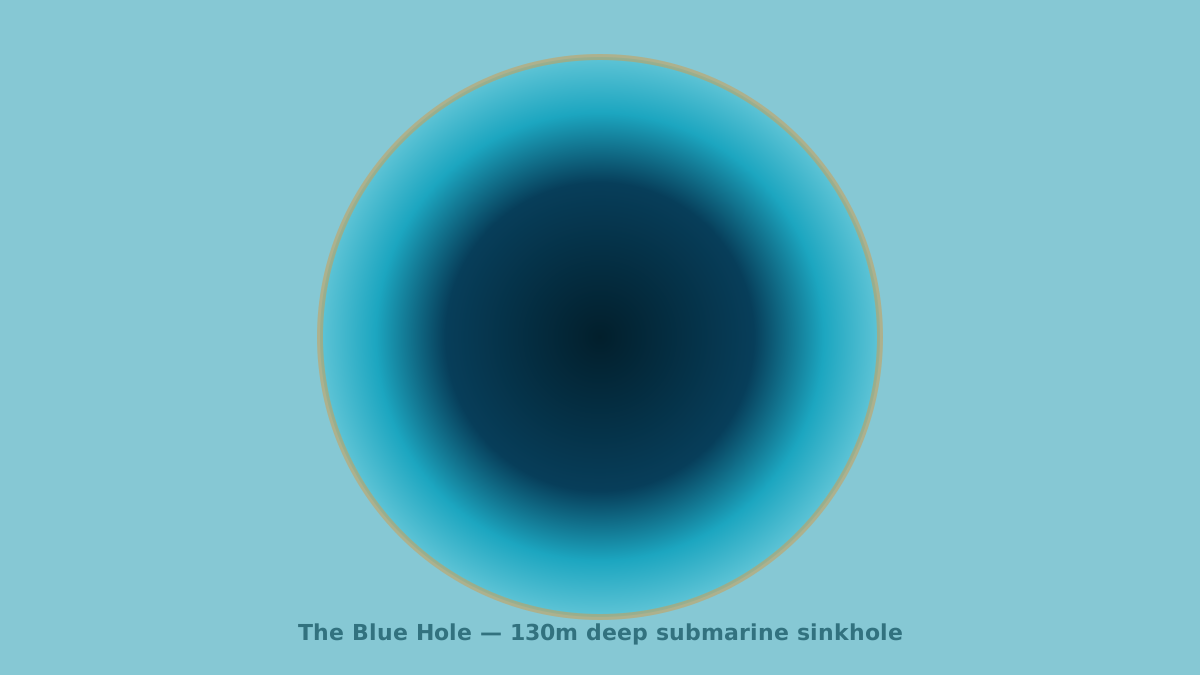
The Blue Hole is the most famous dive site in Egypt — a 100–130-metre submarine sinkhole on the Red Sea coast of Sinai, just north of Dahab. It draws snorkelers floating over its shallow coral rim, recreational divers exploring its inner wall, and technical divers chasing the legendary "Arch". It is also, fairly, called the world's most dangerous dive site. This guide covers everything: what it is, how to snorkel and dive it safely, what it costs, when to come, and exactly how to get there — whether you're staying in Dahab or coming over on a day trip from Sharm El Sheikh.
What Is the Blue Hole?
The Blue Hole is a submarine sinkhole (literally a "blue hole") on the Red Sea coast about 10km north of Dahab, Egypt. It drops to about 100–130 metres at its deepest point. The opening at the surface is a near-perfect circle of deep blue water surrounded by a shallow coral reef — snorkeling from the rim is one of the most visually striking experiences in Egypt.
The site is easy to reach; foreign visitors pay an entrance fee at the road checkpoint (about $20–25 in 2026). You can snorkel, swim on the surface, or dive, depending on your certification level. A row of relaxed Bedouin cafés along the shore makes it a full-day trip rather than just a dive excursion. Despite its fearsome reputation, the vast majority of people who visit the Blue Hole — snorkelers and recreational divers — experience it completely safely. For Dahab safety beyond the water, see Is Dahab safe?
Snorkeling the Blue Hole
Snorkeling from the surface is safe and beautiful. You can see 15–20 metres down into the blue water, watch the coral walls drop away into darkness, and swim alongside reef fish. The rim is shallow (3–8 metres) with excellent coral and visibility. Most visitors who aren't divers simply snorkel the rim and soak up the dramatic colour contrast — turquoise shallows giving way to bottomless navy.
What you need: a mask, snorkel and fins (all rentable from the cafés for ~$5). No guide or certification required. The easiest entry is via the "Saddle" — a shallow sandy gap in the reef. Want a guided trip with transport and lunch? See our Blue Hole guided dive and snorkeling experiences.
Recreational Diving at the Blue Hole
With an Open Water or Advanced Open Water certification, you can dive the Blue Hole down to 30 metres along the inside wall. It's a stunning dive — dramatic coral formations, abundant fish life including Napoleon wrasse, and the eerie sense of looking down into the abyss below you. At this depth the actual danger (The Arch, at 55m) is far beneath you, so recreational diving here sits well within safety limits.
Most Dahab dive centres run daily trips to the Blue Hole. Expect to pay $35–55 for a single-tank guided dive including gear and transport. Compare operators on our Dahab diving guide, or book a guided Blue Hole dive directly.
The Blue Hole, The Bells & El Aquarium
Experienced divers rarely dive the Blue Hole in isolation. The classic circuit starts a short walk north at The Bells — a narrow chimney in the reef you drop through to reach the outer wall — then follows the wall south at depth, swims through into the Blue Hole, and exits over the Saddle. Just inside the rim, El Aquarium is a shallow coral garden perfect for the safety stop. Together they make one of the signature dive experiences in Sinai.
Technical Diving — The Arch
The Arch is the underwater passage at 55m depth that connects the Blue Hole to the open sea. It's 26 metres long and exits onto the outer reef wall in a wash of blue light. The dive is not inherently a death trap, but it demands: trimix gas (not air), technical certification, an experienced guide who knows the site, and the discipline to abort if anything feels off.
Narcosis at depth strips away judgement. Most fatalities happened when recreational divers attempted The Arch on air, overestimated their limits, and ran out of gas before exiting the tunnel. If you want to dive The Arch, train with a technical centre first — and read our honest account of why the Blue Hole is so dangerous.
How to Get to the Blue Hole
From Dahab
The Blue Hole is 10km north of Dahab town on the coast road toward Nuweiba. Options:
- Taxi: The most common option. Negotiate 100–150 EGP (~$2–3) from Dahab town. Agree the return fare or arrange a pickup time.
- Minibus: Shared microbuses run along the coast road for 10–15 EGP. Slower and less predictable, but very cheap.
- Tuk-tuk: Available in Dahab, typically 80–120 EGP each way. Fun, slightly bumpy.
- Bicycle: 10km along a coastal road — pleasant in cooler months (Oct–Mar), brutal in summer. Rent bikes in Dahab for 50–100 EGP/day.
- With your dive centre: Every centre offering Blue Hole dives includes transport.
From Sharm El Sheikh (day trip)
The Blue Hole is about 100km from Sharm El Sheikh — roughly a 1.5–2 hour drive. Many people visit on an organised day trip that bundles transport, snorkeling or a guided dive, and lunch at the Bedouin cafés. Going independently means a private taxi or transfer (more expensive than a shared tour). If you're based in Sharm and want to combine it with seeing the town, see our Sharm El Sheikh to Dahab guide for routes, costs and timings.
What's at the Blue Hole
Beyond the water, the site has:
- Bedouin cafés: Several relaxed café-shacks serving tea, coffee, cold drinks, simple food and shisha. Sitting here after a dive or snorkel is a Dahab tradition. Expect 50–150 EGP for food and drinks.
- Equipment rental: Mask, fins and snorkel from the cafés and a small shop. ~$5 for the set.
- Showers / changing: Basic facilities at the cafés (small fee).
- Dive centre presence: Operators like Big Blue maintain a presence on site for pre-booked divers.
Entrance Fee & Costs
Foreign visitors arriving by road pay an entrance fee at the checkpoint — about $20–25 per person in 2026, usually around $5 for the checkpoint plus around $20 for the site, in cash US dollars (bring clean, undamaged notes). Everything else is optional: café food, gear rental, a guided dive or transport. Rough 2026 costs:
| What | Cost | Notes |
|---|---|---|
| Entrance fee (foreigners, by road) | ~$20–25 | Checkpoint + site fee, cash US dollars; check the current amount |
| Gear rental (mask, snorkel, fins) | ~$5 / ~250 EGP | From the Bedouin cafés and a small shop on site |
| Bedouin café (tea, food, shisha) | 50–150 EGP | Expected if you use the tables, showers or changing area |
| Guided recreational dive | $35–55 | Single tank, gear and transport included, via a Dahab centre |
| Taxi from Dahab town (10km) | 100–150 EGP each way | Or 10–15 EGP by shared minibus; dive packages include transport |
| Day trip from Sharm El Sheikh | Bundled per operator | Transport + snorkel/dive + café lunch in one price |
Exchange rate April 2026: 1 USD ≈ 50 EGP. The entrance fee has risen over time — a Dahab dive centre can confirm the current amount.
Best Time to Visit
The Blue Hole is accessible year-round. Water visibility is best March–May and September–November (25–30m). Summer (June–August) is hot on land (35–40°C) but the water is warm (27–29°C). Winter (December–February) is cooler but still good — wear a wetsuit for diving.
Is the Blue Hole Worth It?
Yes — for almost everyone, and on almost any budget. Snorkelers get a world-class swim over one of the planet's most dramatic underwater drop-offs. Recreational divers get a bucket-list wall dive within safe limits. Even non-swimmers enjoy a cheap, scenic half-day at the cafés with the Red Sea at their feet. The only people who should think twice are untrained divers tempted by The Arch — and for them the answer is simple: don't, until you've done the technical training. Treat the Blue Hole with respect and it's one of the best days you'll have in Egypt.


