The Complete Guide
What is Dahab, Egypt? The honest 2026 guide
Dahab is a small town on the Sinai Peninsula's east coast, on the Gulf of Aqaba — the eastern arm of the Red Sea, with Saudi Arabia visible across the water on a clear day. It sits 90 kilometres north of Sharm El Sheikh, and 540 kilometres east of Cairo. The name itself means "gold" in Arabic, after the colour of the desert mountains that frame the town at sunset.
Dahab is known for three things internationally: the diving (some of the cheapest world-class diving on Earth), the Blue Hole (a 100–130-metre-deep submarine sinkhole 10km north of town), and a particular kind of laid-back travel atmosphere that long-term visitors come back to year after year. It is the antithesis of the resort-tourism model that dominates Sharm El Sheikh and Hurghada — there are no walled hotel compounds, no chain restaurants, no nightclubs. There are dive shops, Bedouin cafés, kitesurfing schools, yoga studios and a 2-kilometre seafront strip of restaurants where the cushions are on the sand and the sea is two metres from your table.
This page is the complete picture: where Dahab is, who it is for, how to get there, what to do, what it costs, and which alternative destinations to compare it against. Each section links to a deeper guide for travellers who want to go further.
Where exactly is Dahab?
Dahab sits on the South Sinai coast at coordinates 28.49° N, 34.51° E. The geography matters because it explains everything else about the town:
- Sharm El Sheikh airport (SSH) is 90 km / 1.5 hours south by road — most international visitors fly into Sharm and transfer to Dahab. Full transit guide.
- Cairo is 540 km / 7–9 hours northwest, reachable by overnight bus or a Cairo–Sharm flight plus a Sharm transfer. Cairo to Dahab full guide.
- Eilat (Israel) is 130 km / 2 hours north via the Taba border crossing — making Dahab one of the few Egyptian destinations that is also accessible from Israel.
- Saudi Arabia is across the Gulf of Aqaba — visible on clear days but not connected by tourist transport.
Dahab itself is small. The seafront is 2 km long. You can walk from the south end (Mashraba) to the north end (Eel Garden / Lighthouse) in 25 minutes. There are essentially four neighbourhoods: Mashraba (central seafront, dense with cafés and dive shops), Lighthouse (the original dive area, slightly quieter), Assalah (the residential old village inland from the seafront), and Eel Garden (the boutique-guesthouse and yoga end of the strip). For where to stay broken down by area, see our Dahab map and area guide.
Who is Dahab for?
Dahab serves a specific kind of traveller. The town is not for everyone, and being honest about who fits and who does not saves a lot of disappointment.
Dahab is excellent for: divers and snorkellers, kitesurfers, digital nomads, yoga practitioners, independent travellers who want a real place rather than a resort, food-focused travellers, couples wanting a romantic-but-real beach trip, families with kids 8+, anyone who has heard about "dive bums" and wondered what that life looks like. The dive industry brings a high-functioning international community to the town — Russian, German, Italian, French, British and American long-stay residents are everywhere, alongside Egyptian and Bedouin locals.
Dahab is less suited to: travellers who want all-inclusive resort infrastructure, families with toddlers (the beaches are coral rubble not soft sand), people who want a club scene (there is none), travellers who do not want to leave a hotel pool, and travellers on rigid 3-day schedules (the town's rhythm makes more sense over 5–7 days minimum).
For a deeper match-by-match breakdown, see our group-specific guides: Dahab for couples, Dahab with kids, Dahab solo, Dahab for digital nomads, Dahab on a budget, Dahab luxury.
Diving in Dahab
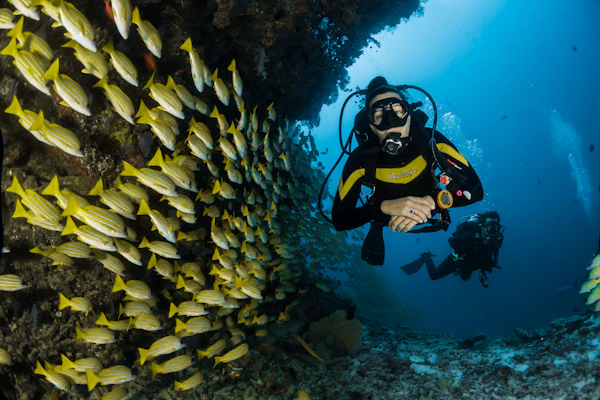
Diving is the reason most visitors first hear about Dahab. The town has 20+ dive sites accessible from shore — meaning you walk into the water with a tank rather than booking a 6am boat trip. This single fact is what makes Dahab the cheapest serious diving destination in the world.
The headline sites:
- The Blue Hole — 100–130-metre submarine sinkhole 10km north of town. Recreational divers can dive the inner wall to 30m; technical divers can swim through the Arch at 55m. See our complete Blue Hole guide.
- The Canyon — a deep crack in the reef with dramatic swim-throughs. One of Dahab's most-loved sites.
- The Bells — a vertical chimney drop into open water, often paired with the Blue Hole drift.
- Lighthouse / Mashraba — the in-town reefs, ideal for short shore dives and Open Water training.
- Eel Garden — a sandy plain inhabited by hundreds of garden eels, beautiful and easy.
- Ras Abu Galum — a 30-minute jeep or 90-minute boat ride north into protected wilderness, with some of the cleanest reef in Sinai.
Costs run around $25–35 per guided fun dive (gear included), $280–380 for PADI Open Water certification, $250–320 for Advanced. There are roughly 20 active dive centres in town with widely varying prices, certifications and specialties. We compare them all on our dive centre comparison page.
Eating and drinking in Dahab
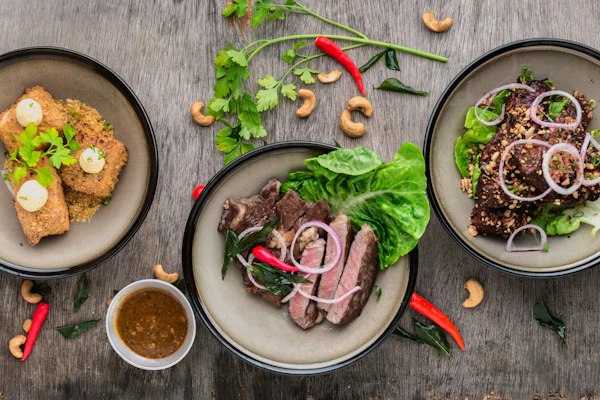
Dahab's food scene is the second reason most travellers fall for the place. Three layers stack on top of each other: cheap Egyptian and Bedouin staples (foul, ta'ameya, koshary, slow-cooked tajines), seafood off the boats that morning (Shark, Nemo, Friends), and an unusual concentration of high-quality international restaurants run by long-term European residents (Pasta Mia for Italian, Athanor for pizza, Namaste for Indian, Ena's Table for brunch, Pattaya Thai for Thai).
A full Egyptian meal at a local spot runs 80–150 EGP ($1.50–3 USD). A mid-range seafront dinner with a drink is 200–500 EGP ($4–10). Resort-style dining hits 600+ EGP. Two people eat well in Dahab for $20–25 USD a day. We compare the best restaurants in Dahab side-by-side — 20 spots with prices, hours, cuisine and Google ratings.
When to visit Dahab
Dahab is open year-round and the climate is comfortable in every month. The trade-offs:
- September — the best overall month. Warm water (27–28°C), top visibility (25–30m), crowds easing post-summer. Most experienced travellers' top pick.
- April–May — sweet spot for new divers. Calm seas, comfortable wetsuits, manageable crowds. Open Water training is at its best.
- October–November — European autumn-break peak. Beautiful conditions, gorgeous sunset light, busier than September.
- December–February — cold-water-but-cheap. Water drops to 21–24°C requiring a 5mm wetsuit. Lowest crowds at the Blue Hole. Budget travel works best here.
- June–August — hottest air temperatures (30–37°C). Warmest water of the year (26–29°C). Peak crowds and prices.
For the full month-by-month breakdown including wetsuit recommendations, see our seasonal guide or pick a specific month: Jan, Feb, Mar, Apr, May, Jun, Jul, Aug, Sep, Oct, Nov, Dec.
How to get to Dahab
Dahab does not have its own airport. The nearest is Sharm El Sheikh International (SSH), 90km / 1.5 hours south. Most travellers fly into SSH and transfer. The transfer options:
- Microbus from Sharm bus station — $1–2, 2 hours, the cheapest option (you need to get from SSH airport to Sharm bus station first via local taxi)
- Pre-booked private taxi from arrivals — $25–45, 1.5 hours, the most common choice
- Hotel transfer arranged by your Dahab accommodation — $25–60, identical experience to private taxi but pre-paid
From other origins:
- From Cairo: bus $7–14 (8–10 hours), or fly to Sharm + transfer ($60–150 total, 5 hours door-to-door)
- From Hurghada: 6+ hours by road, mostly via Sharm
- From Eilat: about 2.5 hours via the Taba land crossing
- From Taba directly: 2 hours by taxi or shared transfer
What does a Dahab trip cost?
Dahab is one of the cheapest international beach destinations for independent travellers. As of 2026, with the Egyptian pound at roughly 50 EGP to 1 USD:
- Backpacker: $20–35 per day all-in. Hostel dorm, local food, walking everywhere, occasional dive.
- Mid-range: $50–90 per day. Private hostel room or budget hotel, daily seafront meals, regular dives or yoga.
- Couple, comfortable: $80–120 per person per day combined. Boutique guesthouse, restaurants twice a day, full activity schedule.
- Resort-style: $150+ per day. Hotel with pool, room service, organised tours.
For receipt-level detail of a real 30-day trip, see our Dahab budget breakdown — $327 for an entire month at the bare-bones tier, $11 a day.
Is Dahab safe?
Generally yes. Dahab is one of the safer places to travel in Egypt and arguably one of the safer beach destinations in the wider region. The town is small, walkable, and economically dependent on tourism — locals are unanimously welcoming, the dive industry brings high standards, and crime against tourists is rare. South Sinai security checkpoints exist throughout the peninsula and are routine.
The risks that do exist are largely in the water — the Blue Hole has a fatality history covered in detail on our Blue Hole deaths feature, but they apply to technical divers attempting the Arch on the wrong gas, not to snorkellers or recreational divers on the inner wall. Sun, dehydration and surface-current awareness are the practical concerns.
For solo female travellers, drug law specifics, current advisories and the regional security context, see our honest 2026 safety guide.
Dahab vs other Egyptian Red Sea destinations
The most common decision travellers face is choosing between Dahab and one of the other Red Sea options. Quick verdicts:
- Dahab vs Sharm El Sheikh: Sharm wins on direct flights and all-inclusive packages. Dahab wins on cost, food, dive flexibility and atmosphere. Many travellers do a 4-night Dahab + 3-night Sharm split.
- Dahab vs Hurghada: Hurghada has more famous boat dives. Dahab has cheaper everything and shore-diving model. Pick Hurghada for wreck-diving holidays, Dahab for everything else.
- Dahab vs Marsa Alam: Marsa Alam is for serious divers chasing dolphins, dugongs and remote houseboats. Dahab is for everyone else.
Plan your Dahab trip
Below this section you will find our curated picks: hotels, hostels, dive centres, restaurants and the latest blog posts. If you want a faster route, use our planner — tell us your dates, group and what you care about and we will send three matched picks for stays, dives and food, with prices and direct booking links. Free.